
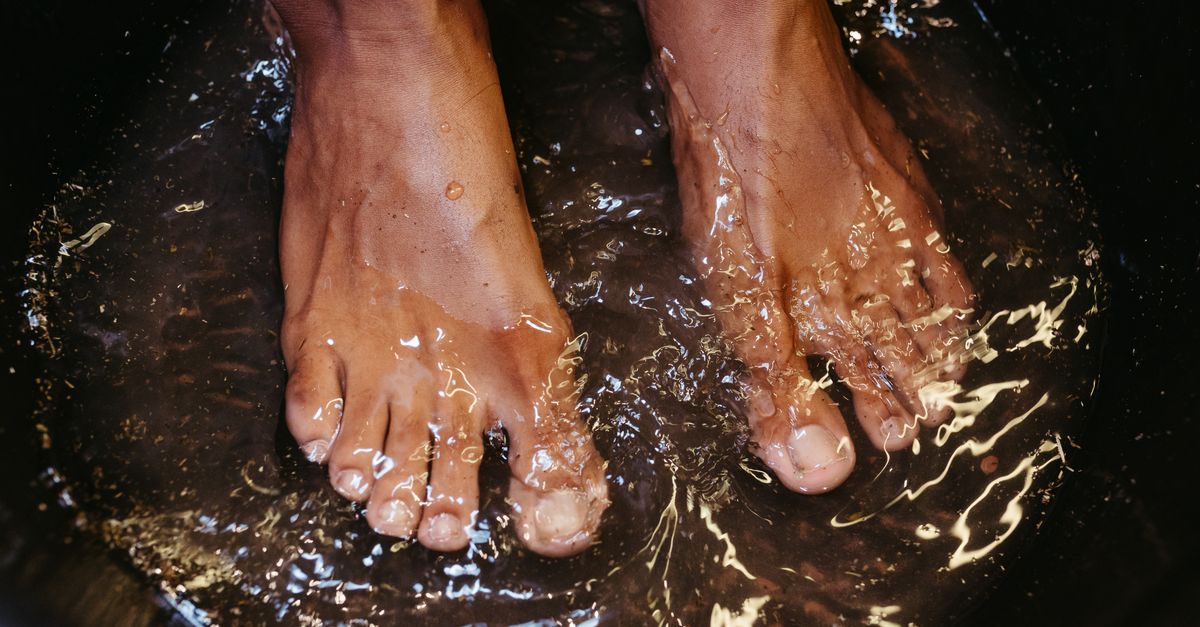
An Epsom salt soak provides temporary surface-level relaxation by warming the skin and muscles in a basin of water, while a foot massager like MedMassager uses circular oscillating motion to physically move muscle tissue and support circulation in the feet and lower legs. A soak requires 15-20 minutes of dedicated time with water preparation and cleanup, while a foot massager can be used seated while doing other tasks. Neither replaces medical treatment, but they serve different purposes: a soak addresses temporary comfort and skin softening, while mechanical oscillation addresses ongoing muscle movement and blood flow support.
If you're comparing an Epsom salt soak vs a foot massager to deal with sore, tired feet at the end of the day, you're really weighing two different categories of relief. One is a decades-old home remedy involving warm water and dissolved magnesium sulfate. The other is a mechanical device that moves the muscles in your feet through oscillating motion.
Both have a place in a foot care routine, but they don't do the same job, and that difference matters when you're deciding which one is worth your time on a given evening. This isn't the same comparison as choosing between two devices, like a foot massager vs a foot spa. This is a ritual versus a machine.
Why Feet Feel Sore After a Long Day
Standing or walking for extended periods puts sustained pressure on the plantar fascia, the band of tissue running along the bottom of the foot, and on the small muscles that stabilize the arch. Mayo Clinic describes the feet as the body's foundation, absorbing repeated impact with every step. Over the course of a day, blood tends to pool in the lower legs and feet, particularly for people who sit or stand in one position for long stretches without much movement.
Several factors commonly contribute to end-of-day foot fatigue, including the following:
- Standing on hard flooring for extended shifts, common among retail workers, nurses, and factory employees
- Poorly fitted or unsupportive footwear
- Reduced calf muscle activity during long periods of sitting
- Underlying conditions such as plantar fasciitis, mild neuropathy, or general circulation sluggishness
None of these causes are fixed by a single remedy. That's part of why so many people cycle between a warm soak one night and a mechanical device the next, looking for whichever gives more relief for the time invested.
What an Epsom Salt Soak Actually Does
An Epsom salt soak involves dissolving magnesium sulfate crystals in warm water and submerging the feet for roughly 15 to 20 minutes. The warmth itself is doing most of the work. Warm water dilates surface blood vessels and relaxes the skin and superficial muscle tissue, which is why a soak feels immediately comforting after a long day.
What the Warmth Provides
Heat from the water is a passive effect. You are not moving the muscle tissue yourself; the water is simply raising the temperature of the tissue it touches. While your feet are submerged, the warmth does a few things at the surface:
- Dilates blood vessels near the skin, increasing surface blood flow
- Loosens tight, tired superficial muscle tissue temporarily
- Softens skin and eases the feeling of tightness after standing
Once your feet are dry and cool again, that surface relaxation fades.
What the Salt Adds
Whether magnesium sulfate is meaningfully absorbed through the skin during a short soak is debated, and there is no established mechanism confirming significant systemic absorption from a foot bath. What is well established is the effect of the warm water itself. Many people find the ritual, quiet time with feet elevated in warm water, genuinely relaxing, independent of any specific chemical effect.
How Oscillating Foot Massage Works
A vibration foot massager works on a different principle than a soak. Instead of applying passive heat, it applies active, repeated mechanical movement to the muscles in the foot. MedMassager uses oscillating technology to deliver deeper, more controlled vibration than conventional massagers, moving the foot in a circular oscillating motion rather than a simple buzzing vibration.
Active Movement vs Passive Heat
That distinction matters physiologically. A soak warms tissue from the outside in. Oscillating motion moves the muscle and soft tissue of the foot directly, and the calf muscles engage as they respond to that movement. This is a mechanical action, not a chemical or thermal one, and it continues for as long as the unit is running rather than fading once you step away from the water.
During a session, the circular oscillating action does several things at once:
- Moves the small muscles and soft tissue of the foot through repeated motion
- Engages the calf muscles, which push blood upward instead of letting it pool in the feet
- Keeps that movement going steadily for the length of the session
What This Means for Plantar Fasciitis
For people managing plantar fasciitis specifically, oscillating motion supports blood flow through the foot during rest instead of letting it settle, which is a different kind of relief than surface warmth provides. You can browse the full range of oscillating foot massagers to compare the adjustable intensity settings available.
Epsom Salt Soak vs Foot Massager: Practicality
Time cost is where these two options diverge most sharply. A soak requires filling a basin, dissolving the salt, waiting for the water to reach a comfortable temperature, sitting through the soak itself, then draining and drying up afterward. A foot massager requires sitting down, placing your feet on the platform, and turning it on.
The practical differences break down like this:
- A soak typically takes 25 to 35 minutes including setup and cleanup, and it ties up a bathroom or kitchen space
- A foot massager can be used seated at a desk, in front of the television, or anywhere you can sit with the unit in front of you
- A soak is a single-use ritual; the water is discarded afterward
- A device is reused session after session with nothing to prepare or discard
- A soak is difficult to do daily given the time investment; a massager is easier to fit into a daily routine
Neither approach is objectively better across the board. If unwinding for 20 minutes with your feet in warm water sounds like a welcome pause in your day, that has genuine value beyond the physical effect. If you want something you can use most evenings without carving out a dedicated block of time, a mechanical option fits more easily into daily life. If you're weighing this against a full foot spa unit instead of a simple soak, the foot massager vs foot spa comparison covers that device-to-device decision separately.
Daily Routine: Using Both Without Overdoing It
Some people don't need to choose one over the other. A soak a few times a week paired with a foot massager on the days in between covers both the ritual and the mechanical benefit without demanding too much time on any single day.
A simple way to structure this:
- On busier weeknights, sit down with an oscillating foot massager for 10 to 15 minutes at a low to moderate intensity while catching up on email or watching television
- Reserve a warm Epsom salt soak for one or two evenings a week when you have more time to unwind
- Avoid combining a hot soak immediately before or after massager use on the same feet if skin feels irritated or unusually sensitive
- Keep sessions with either method to 15 to 20 minutes; longer isn't necessarily more effective and can lead to skin dryness in the case of frequent soaking
The point isn't to pick a winner. It's to use each one for what it does best: the soak for warmth and downtime, the massager for consistent, repeatable muscle movement.
Special Considerations for Specific Conditions
Diabetes and Hot Water Safety
People managing diabetes should be cautious with hot water soaks, since reduced sensation in the feet can make it harder to notice water that's too hot, raising the risk of burns. A physician or podiatrist should weigh in before you add either a soak routine or a massage device if any of the following apply:
- Diabetic neuropathy or any reduced sensation in the feet
- Open wounds, cuts, or skin breakdown on the feet
- Poor circulation in the feet or lower legs
Neuropathy and Limited Movement
For people managing neuropathy more broadly, continuous movement helps keep blood flowing through the feet when natural movement is limited. That is one reason a mechanical option is often easier to build into a routine than a soak that requires standing and moving around a hot basin. The circular oscillating action creates continuous, repetitive movement in the foot and calf, which supports circulation during use.
MedMassager Foot Massagers are FDA-registered Class I medical devices commonly used by people managing conditions like neuropathy, plantar fasciitis, and general circulation concerns, though they are not a treatment or cure for any of these conditions.
Fall Risk for Older Adults
Older adults should also consider fall risk. Getting in and out of a position with wet feet near a basin carries some risk of slipping, whereas a seated foot massager keeps both feet on a flat, stable platform the entire time.
Frequently Asked Questions
Is an Epsom salt soak better than a foot massager for foot pain?
Neither is definitively better; they address different things. A soak provides temporary surface warmth and relaxation, while a foot massager provides repeated mechanical movement that supports circulation over a longer period. Many people use both depending on how much time they have and what kind of relief they're looking for on a given day.
How long should you soak your feet in Epsom salt?
A typical Epsom salt soak lasts around 15 to 20 minutes in comfortably warm, not scalding, water. Soaking longer doesn't necessarily add benefit and can dry out the skin with frequent use. Always test water temperature carefully, especially for anyone with reduced sensation in the feet.
Can you use a foot massager every day?
Yes, an oscillating foot massager can generally be used daily for short sessions of around 10 to 20 minutes at a comfortable intensity. Daily use is one of the practical advantages over a soak, since it doesn't require the same setup and cleanup time. Anyone with a specific medical condition should confirm frequency with a healthcare provider first.
Does Epsom salt actually absorb through the skin?
Whether meaningful amounts of magnesium sulfate absorb through the skin during a short foot soak is not well established, and there's no confirmed mechanism proving significant systemic absorption this way. What is clear is that the warm water itself relaxes surface muscle tissue and softens skin, which accounts for much of the relief people feel. The ritual of a quiet soak may also contribute to the sense of relaxation independent of the salt.
Why do my feet feel better after using a massager than after soaking?
A foot massager physically moves the muscles in the foot through repeated motion, which is an active mechanical effect rather than a passive thermal one. This movement activates the calf muscles and helps keep blood circulating through the foot and lower leg. A soak, in contrast, relies on external warmth that fades once the water cools.
Should people with diabetes use Epsom salt soaks?
People with diabetes should talk to a doctor before regular Epsom salt soaking, particularly if they have any degree of neuropathy or reduced sensation in the feet. Hot water carries a burn risk when sensation is diminished, and skin integrity is a bigger concern for people managing diabetes. A podiatrist can advise on safer alternatives for daily foot care.
What should I look for in a foot massager compared to a home soak?
Look for adjustable intensity, a stable seated platform, and a mechanism based on circular oscillating motion rather than simple buzzing vibration, since oscillation moves the muscle tissue more directly. Compared to a soak, a good foot massager should require minimal setup so it fits easily into a daily routine. The MedMassager Foot Massager is an FDA-registered Class I medical device designed around adjustable intensity and seated daily use rather than one-off relaxation.
Epsom Salt Soak vs Foot Massager: Bottom Line
An Epsom salt soak and a foot massager solve different problems. The soak offers a warm, low-effort ritual with temporary surface relaxation, best reserved for evenings when you have time to spare. A foot massager offers repeatable, active muscle movement through oscillating motion that fits into a daily routine without the setup and cleanup a soak requires.
Choosing between an Epsom salt soak and a foot massager often comes down to how much time you have and whether you want a passive or active approach on a given day. For many people, the two aren't competitors at all but complements, each used when it fits. If you want a daily option that doesn't require draining a basin every time, take a look at the full MedMassager Foot Massager lineup to find a fit for your routine.
This content is for informational purposes only and is not intended as medical advice, diagnosis, or treatment. Always consult a qualified healthcare professional before starting any new treatment or therapy. MedMassager products are FDA-registered Class I medical devices.


