
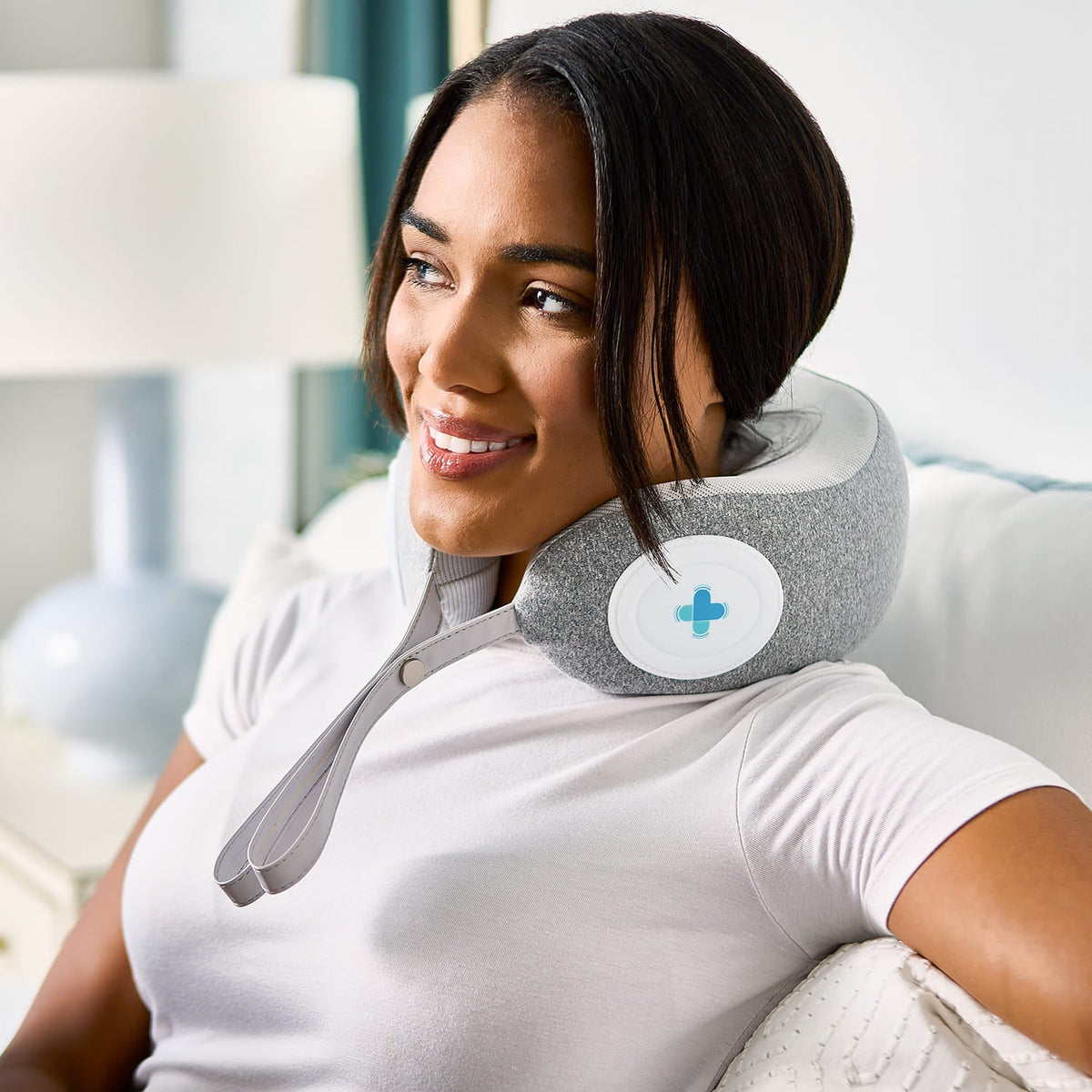
The best neck massager for seniors is simple to operate, starts at a gentle intensity, uses heat that can be closely monitored, and works only on the back of the neck and upper shoulders rather than the front or sides. Older adults often have thinner skin, reduced sensation, and age-related changes in the cervical spine, so ease of use and safety matter more than maximum power. The MedMassager Neck Massager uses dual-direction rotating massage nodes with built-in heat to work the muscles at the back of the neck and upper shoulders. Anyone with carotid artery disease or a cervical spine condition should talk with a physician before using any neck massager.
Shopping for the best neck massager for seniors looks simple until you start reading product listings. Many listings emphasize the deepest pressure possible, which is not what a 75-year-old with thinning skin, a stiff cervical spine, or a daily blood thinner needs.
You might be an older adult whose neck tightens after an afternoon of reading, or a family member trying to pick a safe gift for an aging parent. Either way, the priorities are different.
The controls need to be easy to see and press, and the intensity needs to start gentle. Heat has to be used with care, and the device must stay away from the front and sides of the neck, where major arteries run. This guide covers how the neck changes with age, what a neck massager can and cannot do, the features that matter most for older users, a safe daily routine, and the conditions that call for a doctor's input first.
Why Neck Pain Changes With Age
Neck discomfort in your 70s rarely comes from the same source as neck discomfort in your 30s. Slow changes in the spine, muscles, and skin build on each other over time. Each one affects how you should choose and use a neck massager.
Wear in the Cervical Spine
The cervical spine is the stack of seven vertebrae that supports your head. Mayo Clinic describes cervical spondylosis as age-related wear and tear affecting the spinal disks in the neck. As disks lose height and water content, the small joints between vertebrae carry more load. Bony growths called osteophytes can also form along the edges of the vertebrae.
Many people with these changes feel stiffness more than sharp pain, especially in the morning or after holding the head still. The muscles around the spine often tighten to guard the joints. That adds a muscular layer to what started as a structural change, and the muscular layer is the part a massager can reach.
Posture and Muscle Tension
Years of reading and looking down at phones pull the head forward of the shoulders, and so does a gradually rounding upper back. The trapezius and levator scapulae connect the neck to the shoulder blades, and these muscles work harder to hold a forward head in place. Over time they become tight, tender, and slow to relax. Common contributors include:
- Forward head posture from reading, screens, or bifocals that encourage tilting the head
- A rounded upper back (kyphosis) that shifts the head's weight forward
- Less daily activity, which means less natural movement through the neck and shoulders
- Pillows or sleeping positions that leave the neck bent for hours
- Stress, which keeps the upper shoulders lifted and tense
Changes in Skin, Sensation, and Circulation
Skin becomes thinner with age and loses some of the fat layer beneath it, so it offers less cushioning against pressure and heat. Older skin also bruises more easily, particularly in people taking blood thinners or daily aspirin.
Sensation can decline as well. Normal aging, diabetes, nerve conditions, and numb areas around old surgical scars can all dull the ability to feel heat and pressure. When that happens, a device can get too warm or press too hard before you notice. These changes are the main reason a neck massager for older adults needs to be chosen differently than one for a younger person.
How a Neck Massager Helps Older Adults
A neck massager does not reverse spinal wear or rebuild disks. It works on the muscle layer around the cervical spine, which is where much of the day-to-day stiffness in older adults comes from.
What Rotating Massage Nodes Do
The MedMassager Neck Massager uses dual-direction rotating massage nodes. For trapezius tightness, the massage nodes mimic hand kneading on the trapezius muscle, helping loosen tissue that tightens from poor posture or extended screen time. For upper back pain, dual-direction nodes target the trapezius and surrounding muscle tissue, helping relieve tightness from prolonged sitting or stress.
Switching direction works the tissue from more than one angle, which is closer to the way a pair of hands kneads a tight shoulder. For older users, this means the nodes can do the work at a moderate pressure. Deep force is not required.
What Built-In Heat Adds
For neck stiffness, rotating massage nodes combined with built-in heat warm and loosen tight muscles, supporting blood flow through the neck. Many older adults find warmth more comfortable than deeper pressure, especially on a stiff neck in the morning.
For tension headaches, dual-direction massage nodes loosen the muscles at the base of the neck, helping ease tension that contributes to headache pain. The MedMassager Neck Massager with built-in heat is an FDA-registered Class I medical device built for this kind of everyday muscle tension.
What a Neck Massager Cannot Do
Setting realistic expectations protects you from disappointment and from delaying care you actually need. A neck massager is not:
- A treatment for spinal stenosis, disk herniation, or arthritis in the neck
- A replacement for physical therapy, prescribed exercises, or medication
- An answer for pain that travels down the arm, which needs a medical evaluation
- Appropriate for the front or sides of the neck under any circumstances
Use it alongside whatever your doctor or physical therapist has recommended, not in place of it.
How to Choose a Neck Massager for Seniors
The best neck massager for seniors is rarely the most powerful one on the market. It is the one an older adult can operate independently, at a comfortable intensity, without putting fragile skin or sensitive areas of the neck at risk. Use the table below as a quick checklist.
| Feature | Why It Matters for Older Users | What to Check |
|---|---|---|
| Simple controls | Hand arthritis and vision changes make small buttons hard to use | Clearly labeled buttons and few modes to remember |
| Gentle starting intensity | Stiff joints and thinner tissue respond better to light pressure | Ability to begin light and build gradually |
| Manageable heat | Thinner skin and reduced sensation raise burn risk | Whether heat can be switched off and how warm it gets |
| Back-of-neck placement | The front and sides of the neck contain major arteries | A design that rests on the back of the neck and shoulders |
| Comfortable seated use | Many seniors have limited shoulder range of motion | Can be positioned without lifting the arms overhead |
Ease of Use
If a parent needs to call you every time they want to turn the device on, they will stop using it. Look for:
- Controls that can be found by touch and read without glasses
- A short list of settings rather than a long menu
- A design that is easy to place from a seated position, since reaching behind the head is difficult for anyone with shoulder arthritis or a past rotator cuff injury
Gentle, Controllable Intensity
Older tissue tolerates pressure less well, and a stiff neck often tightens further when it is pushed too hard. Choose a massager that allows a light start. More intensity is not a sign of better quality. It is simply more force, and for most seniors moderate pressure applied consistently does more than aggressive pressure applied once in a while.
Heat Safety for Thinner Skin
Heat is one of the most useful features for an aging neck. It also carries the most risk. Before buying any heated neck massager, confirm how the heat is turned on and off and how quickly you can stop it. For anyone with reduced sensation, plan to use a thin layer of clothing between the device and the skin, and check the skin after each session for redness that does not fade.
Placement on the Back of the Neck
Any neck massager should work only on the back of the neck, the base of the skull, and the upper shoulders. The front and sides of the neck contain the carotid arteries, the jugular veins, and sensitive nerve structures. For a detailed map of which areas are safe and which are not, read our guide to neck massage safety zones and pressure warnings.
Where the MedMassager Neck Massager Fits
The MedMassager Neck Massager combines dual-direction rotating nodes with built-in heat, which pairs kneading-style massage with warmth. The nodes knead the muscles at the back of the neck and upper shoulders while the heat warms the tissue, supporting blood flow through the area. Review the current control and heat details on the Neck Massager product page for older adults so you can match them against the checklist above.
A Safe Neck Massager Routine for Seniors
A consistent, gentle routine works better than an occasional long session. These steps assume a seated position in a supportive chair, with the device resting on the back of the neck and upper shoulders.
Step-by-Step Routine
- Sit upright in a chair with a firm back and your feet flat on the floor.
- Place a thin layer of clothing, such as a collared shirt or light scarf, between the device and your skin.
- Position the massager on the back of the neck and the tops of the shoulders, never on the front or sides.
- Start at the lowest intensity and keep heat off for the first session or two.
- Limit early sessions to about 10 minutes. Work up to around 15 minutes once you know how your skin and neck respond.
- Stay awake and alert during use. Never use a heated neck massager while drowsy or in bed.
- Afterward, check the skin for redness, blotchiness, or bruising, using a mirror or asking a family member.
- Repeat once or twice a day at most, with several hours between sessions.
Signs to Stop and Call Your Doctor
Stop using the massager right away and contact a healthcare provider if you notice any of the following during or after a session:
- Dizziness, lightheadedness, or feeling faint
- Changes in vision or speech
- Numbness, tingling, or weakness in the arms or hands
- A new or unusually severe headache
- Skin redness or blistering that does not fade within an hour
Sudden changes in speech, vision, or strength on one side of the body need emergency care, not a follow-up appointment.
Special Considerations for Seniors and Caregivers
Most older adults can use a neck massager comfortably. Some health conditions, however, change the risk enough that a physician should weigh in before the first session.
Carotid Artery Conditions
The carotid arteries run along both sides of the neck and carry blood to the brain. Each artery contains a pressure sensor called the carotid sinus. Pressing on it can trigger a sudden drop in heart rate and blood pressure, and this reflex tends to be more sensitive in older adults.
In carotid artery disease, plaque has built up inside the artery wall, and physicians generally advise against pressing or massaging over it. If you have carotid artery disease, a carotid stent, a history of stroke or transient ischemic attack (TIA), or unexplained fainting episodes, ask your doctor before using any neck massager.
Cervical Spine Conditions
Structural problems in the neck can make movement or pressure riskier than ordinary muscle tightness. Check with a physician first if you have:
- Cervical spinal stenosis or cervical myelopathy
- A recent neck surgery or cervical fusion
- Rheumatoid arthritis affecting the neck
- Osteoporosis with known vertebral fractures
- Neck pain that began after a fall or accident
Medications and Skin Sensitivity
Long-term steroid use can thin the skin, and both steroids and blood thinners make bruising more likely. Diabetes and some nerve conditions can reduce sensation, so heat and pressure need closer monitoring. Anyone in these groups should check with their doctor before using a neck massager, then start with the lowest intensity, short sessions, and a fabric barrier.
Buying for an Aging Parent
If you are choosing a neck massager as a gift, try it out together the first time. Walk through the controls, write simple instructions on a card, and keep the device near the chair where your parent usually sits. Show them how the rotating massage nodes knead the muscles at the back of the neck and upper shoulders while the built-in heat warms the tissue, so they understand what the device is doing and where it belongs.
If your parent has memory changes, someone should supervise sessions, because they may not remember time limits or report discomfort. You can also browse the full range of MedMassager therapeutic massagers if other areas of the body need attention too.
Frequently Asked Questions
Is it safe for seniors to use a neck massager?
Most seniors can use a neck massager safely when they start at a low intensity, keep sessions short, and work only on the back of the neck and shoulders. Safety depends heavily on individual health history. Anyone with carotid artery disease, a past stroke, or a cervical spine condition should get a physician's approval first.
Can elderly people use a heated neck massager?
Elderly people can use a heated neck massager, but heat needs extra caution because aging skin is thinner and sensation may be reduced. Use a thin layer of clothing between the device and the skin, and never use heat while drowsy. Check the skin afterward for redness that does not fade.
Where should you not use a neck massager?
You should never use a neck massager on the front or sides of the neck, where the carotid arteries, jugular veins, and sensitive nerves are located. Avoid areas with broken skin, bruising, recent surgical incisions, or swelling. Keep the device on the back of the neck, the base of the skull, and the upper shoulders.
How long should a senior use a neck massager?
Seniors should start with sessions of about 10 minutes and work up to roughly 15 minutes once they know how their neck and skin respond. Once or twice a day is enough for most people. Longer sessions increase the risk of skin irritation without adding meaningful benefit.
Should someone with arthritis in the neck use a neck massager?
People with arthritis in the neck should ask their doctor before using a neck massager, especially if they have spinal stenosis, nerve symptoms, or rheumatoid arthritis. Many people with mild age-related arthritis tolerate gentle massage on the surrounding muscles. Symptoms like arm numbness or weakness mean massage should wait until a physician has evaluated the neck.
What is a good neck massager for an elderly parent?
A good neck massager for an elderly parent has simple controls, a gentle starting intensity, and heat that can be monitored or turned off. The MedMassager Neck Massager uses dual-direction rotating massage nodes combined with built-in heat to warm and loosen tight muscles, supporting blood flow through the neck. Set it up with your parent and review safe placement before the first session.
Bottom Line
The best neck massager for seniors is one that an older adult can use independently, at a gentle intensity, on the back of the neck only, with heat used carefully. Thinner skin, reduced sensation, and changes in the cervical spine make these features more important than raw power.
Anyone with carotid or cervical spine conditions should talk with a physician before starting. If you are ready to compare options, explore the MedMassager Neck Massager with dual-direction nodes and heat, an FDA-registered Class I medical device designed for everyday neck and shoulder tension. Its rotating massage nodes knead the muscles at the back of the neck and upper shoulders while the built-in heat warms the tissue, supporting blood flow through the area.
This content is for informational purposes only and is not intended as medical advice, diagnosis, or treatment. Always consult a qualified healthcare professional before starting any new treatment or therapy. MedMassager products are FDA-registered Class I medical devices.


