
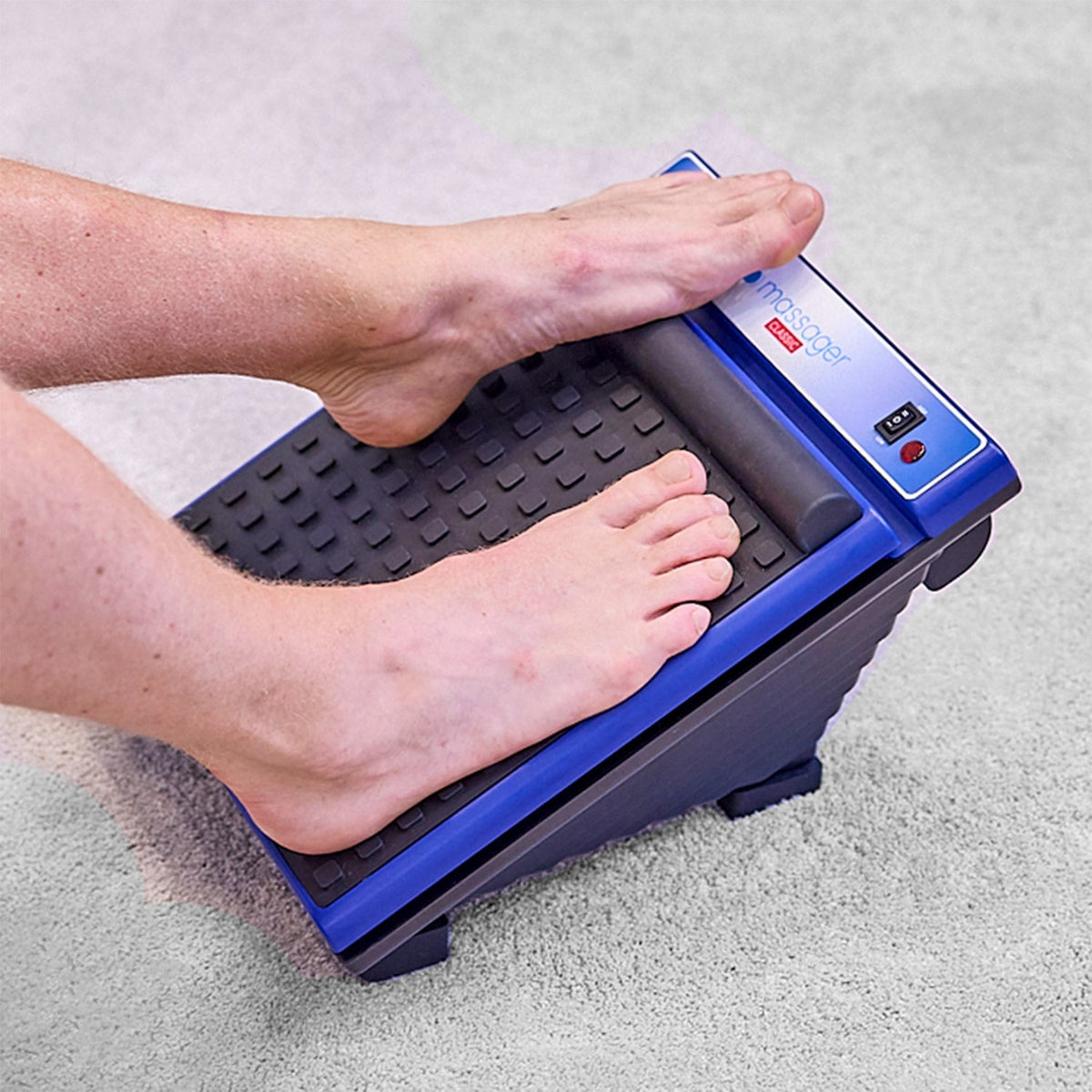
The best foot massager for arch pain gives your entire sole full contact with an open flat platform, moves with a controlled circular oscillating action, and lets you adjust the intensity. Full-sole contact reaches the arch without pressing hard into a single tender spot. Adjustable intensity lets you start gently while the plantar fascia is irritated and increase the setting as your feet tolerate it. The MedMassager Foot Massager Plus meets all three criteria and is designed for seated use.
If you've ever stepped out of bed and felt a sharp pull through the middle of your foot, or ended a long shift with arches that ache with every step, you already know arch pain isn't a minor inconvenience. Finding the best foot massager for arch pain is harder than it should be, because most product listings focus on heat settings and remote controls instead of how the device actually contacts the arch. This guide is for shoppers who want a practical answer: people with plantar fascia strain, flat feet, high arches, or jobs that keep them standing on hard floors for hours.
Arch pain is fussy. Too much pressure aggravates the tissue, and too little does nothing at all. The right massager works with that, not against it. Below, you'll learn what causes arch pain, which design features matter for the arch, how common massager types compare, and how to build a seated routine that fits your day.
What Causes Arch Pain?
The arch is held up by bones, ligaments, muscles, and a thick band of connective tissue called the plantar fascia. When any part of that system is overloaded, the arch is usually where you feel it. Identifying the likely cause helps you choose a massager and a routine that suit your feet.
Plantar Fascia Strain
Mayo Clinic describes plantar fasciitis as inflammation of a thick band of tissue that runs across the bottom of each foot and connects the heel bone to the toes. Although it is best known for heel pain, the strain often extends into the arch, where the fascia works like a bowstring supporting the foot's shape.
Every step stretches the fascia as your weight rolls forward and your toes bend upward. Repeated loading without enough recovery leaves the tissue tight and tender. That's why the first steps after sitting or sleeping often hurt the most: the fascia shortens during rest and is suddenly stretched again.
Flat Feet and High Arches
Foot shape changes how load is distributed. Flat feet allow the arch to collapse inward under body weight, which places extra stretch on the fascia and the posterior tibial tendon running along the inner ankle. High arches do the opposite. They concentrate pressure on the heel and the ball of the foot, leaving the arch rigid and less able to absorb shock.
Both shapes can produce arch pain through different routes. If your arch shape is your main concern, our guide to choosing a foot massager for high arches covers fit in more detail. This article focuses on arch pain itself, whatever your foot type.
Long Hours Standing and Other Contributors
Standing for extended periods keeps the arch under constant load with very little movement. Nurses, retail workers, warehouse staff, teachers, and anyone on hard flooring for a full shift are especially familiar with end-of-day arch fatigue. Several other factors stack on top of that load:
- Footwear with little arch support or thin, worn-out cushioning
- Tight calf muscles and Achilles tendons, which increase tension on the fascia
- A sudden jump in walking, standing, or activity levels
- Extra body weight, which increases force on the arch with every step
- Age-related changes in the fat pad and connective tissue of the foot
How a Foot Massager Helps Arch Pain
A foot massager doesn't change the shape of your arch or repair tissue. What it can do is introduce repeated, controlled movement to a part of the body that spends much of the day either overloaded or completely still. For people with plantar fasciitis, oscillating motion keeps blood flowing through the foot instead of settling during rest. The design details below determine whether that movement actually reaches the arch.
Why Full-Sole Contact Matters for the Arch
The arch is the hardest part of the foot for many massagers to reach. Devices with fixed nodes or rollers press into specific points, and whether one of those points lines up with your arch depends on your foot size and shape. On a tender arch, a hard node landing in the wrong spot can feel more aggravating than helpful.
An open flat platform works differently. Your whole sole rests on the surface, so movement transfers through the heel, arch, and forefoot together. The arch receives motion without being singled out for direct, concentrated pressure, and the open design accommodates flat feet, high arches, and wider feet without squeezing them into a chamber.
Circular Oscillating Action vs. Standard Vibration
Many foot massagers are sold as vibration massagers, and vibration is a reasonable place to start. MedMassager uses oscillating technology to deliver deeper, more controlled vibration than conventional massagers. The platform oscillates in a circular motion, moving the feet and lower legs instead of producing a surface buzz.
That difference matters for the arch. Surface vibration tends to stay in the skin and the outer layer of tissue. A circular oscillating action engages the muscles of the foot and calf, and repeated foot motion activates the calf muscles that help push blood back up the leg. You can browse therapeutic foot massagers built around oscillation to see how the platform design works.
Intensity Control for Tender Arches
Arch pain varies from day to day, and the right setting varies with it:
- A morning flare usually calls for the gentlest setting.
- Tired but not inflamed arches after a shift may tolerate more.
- Someone still learning how their fascia responds should start low and build over several sessions.
Adjustable intensity lets you match the massager to the condition of your feet rather than settling for a device with little room to adjust. Without that control, many people with irritated fascia simply stop using the device.
Best Foot Massager for Arch Pain: Buying Guide
Shopping for the best foot massager for arch pain gets simpler once you know which features affect the arch and which are mostly packaging. Use the checklist below to narrow your options, then compare common massager types.
Features That Matter Most
- Full-sole contact: An open flat platform reaches the arch without forcing your foot into a fixed node pattern.
- Motion type: Circular oscillation engages muscle tissue in the foot and calf instead of staying at the surface.
- Adjustable intensity: Multiple settings let you work around flare-ups and sensitive days.
- Fit for your foot: An open design accommodates different arch heights and foot widths.
- Medical device status: An FDA-registered Class I medical device is a different category from a general consumer gadget.
How Common Massager Types Compare for Arch Pain
Each massager category approaches the foot differently, and the differences show up most clearly at the arch.
- Shiatsu chamber massagers: Nodes inside an enclosed chamber knead specific points. Coverage of the arch depends on how your foot lines up with the nodes, and the enclosed design can feel tight on wider or high-arched feet.
- Handheld vibration massagers: These target one small spot at a time and require you to bend forward and hold the device against your foot.
- Massage balls and rollers: These are useful for manual work but depend entirely on your own effort and pressure control.
- Vibration plates: These are exercise platforms that you stand on, which keeps body weight pressing down on an already loaded arch.
- Oscillating foot massagers: You sit with your feet resting on an open flat platform that oscillates in a circular motion, delivering full-sole movement at the intensity you choose.
If you prefer hands-on technique, manual massage and rollers can work alongside a powered massager. For people whose arch pain stems mainly from plantar fasciitis, our breakdown of the best foot massager for plantar fasciitis covers that condition specifically.
Our Pick: The MedMassager Foot Massager Plus
The Foot Massager Plus is our recommendation for shoppers with arch pain because it combines the three features that matter most. Your entire sole rests on an open flat platform, the platform oscillates in a circular motion, and adjustable intensity settings let you start gently and build up. It is an FDA-registered Class I medical device that delivers professional-grade power from a seated position.
For arch pain linked to plantar fasciitis, the circular oscillating action creates continuous, repetitive movement in the foot and calf, which supports circulation during use. You can compare the Foot Massager Plus and the rest of the foot massager lineup to see which model fits your routine.
Using a Foot Massager for Arch Pain
Consistency matters more than intensity. A short, regular routine is easier to keep up and gentler on irritated tissue than occasional long sessions at a high setting. Every MedMassager Foot Massager is used seated, with your feet resting on the platform.
- Sit in a supportive chair. Choose a chair where your feet can rest flat on the platform with your knees bent comfortably.
- Place both feet fully on the platform. Make sure your heels, arches, and forefeet are all in contact with the surface.
- Start at the lowest intensity. Give your feet a minute or two to adjust, especially on mornings when your arches feel tight.
- Increase gradually. Raise the setting only as far as feels comfortable. Movement should feel comfortable and never sharp or painful.
- Aim for 10 to 15 minutes. This is a practical starting point for most people. Adjust based on how your feet respond over the following hours.
- Repeat once or twice daily. Many people find a morning session before the first long stretch of standing and an evening session after work fit naturally into the day.
If you live with plantar fasciitis, a session after a long period of sitting can be especially useful. The circular oscillating action engages the muscles of the foot and calf, encouraging blood flow that would otherwise settle during rest, so the minutes before those first stiff steps are a natural time to schedule it. If you want options for other areas of the body as well, the full MedMassager catalog covers foot, body, and neck massagers.
Special Considerations for Arch Pain
A foot massager works best as one part of a broader plan. Supportive footwear, gentle calf and arch stretches, and pacing your time on your feet all reduce the load placed on the plantar fascia. Use the massager alongside whatever your doctor or podiatrist has recommended, not in place of it.
Diabetes and Reduced Sensation
If you have diabetes or neuropathy, reduced sensation can make it harder to judge whether an intensity setting is too strong. Start at the lowest level, check your feet for redness or skin changes after each session, and talk with your doctor before beginning. For people managing diabetes, repeated foot motion from the circular oscillating action activates the calf muscles, pushing blood upward instead of letting it pool in the feet.
When to See a Doctor
Most arch pain improves with rest, supportive shoes, and stretching, but some symptoms need a professional evaluation. Contact a healthcare provider if you notice any of the following:
- Pain that persists for more than a few weeks despite home care
- Swelling, warmth, or redness in the arch or heel
- Numbness, tingling, or burning in the foot
- Pain that began after a fall, twist, or other injury
- A visible change in the shape of your arch
Frequently Asked Questions
Can a foot massager help with arch pain?
A foot massager can help by introducing repeated, controlled movement to the arch and the muscles that support it. Models with an open flat platform reach the arch through full-sole contact instead of pressing hard into one spot. When arch pain is linked to plantar fasciitis, circular oscillation engages the foot and calf muscles, which supports blood flow through tissue that otherwise sits still. It works best alongside stretching, supportive footwear, and your doctor's guidance.
How long should I use a foot massager for arch pain?
Ten to fifteen minutes per session is a practical starting point for most people. One or two sessions a day, such as before and after work, is a common routine. Start at a low intensity and adjust based on how your feet feel over the following hours.
Is a shiatsu or oscillating foot massager better for arch pain?
The two types reach the arch in different ways. Shiatsu massagers use nodes inside an enclosed chamber, so arch coverage depends on how your foot lines up with the nodes. Oscillating massagers move your entire sole on an open flat platform in a circular motion, which reaches the arch without concentrated point pressure. The full-sole approach is also easier to control when the arch is tender.
Why does my arch hurt after standing all day?
Standing keeps the arch under constant load with very little movement to relieve it. Over hours, the plantar fascia and the small muscles of the foot become fatigued and tight, especially on hard floors or in shoes with little support. Flat feet and high arches can make this worse by shifting how force is distributed across the foot.
Do flat feet cause arch pain?
Flat feet can contribute to arch pain because the arch collapses inward under body weight. That collapse places extra stretch on the plantar fascia and the tendon running along the inner ankle. Not everyone with flat feet has pain, but supportive footwear and stretching can help those who do.
Should you massage your arch if it hurts?
Gentle massage is generally fine for tired or tight arches, as long as it does not cause sharp pain. Start with light pressure and back off if the pain increases during or after massage. If your arch hurts after an injury, or if you notice swelling, numbness, or warmth, see a healthcare provider before massaging the area.
The Bottom Line: Best Foot Massager for Arch Pain
The best foot massager for arch pain reaches the arch through full-sole contact, uses controlled circular oscillation instead of surface buzz, and gives you intensity settings that match how your feet feel each day. Those three features matter more than any add-on.
Backed by 15+ years of making therapeutic massagers, MedMassager built the Foot Massager Plus around exactly that combination, as an FDA-registered Class I medical device for seated use. When you're ready, shop MedMassager foot massagers and choose the model that fits your routine.
This content is for informational purposes only and is not intended as medical advice, diagnosis, or treatment. Always consult a qualified healthcare professional before starting any new treatment or therapy. MedMassager products are FDA-registered Class I medical devices.


