
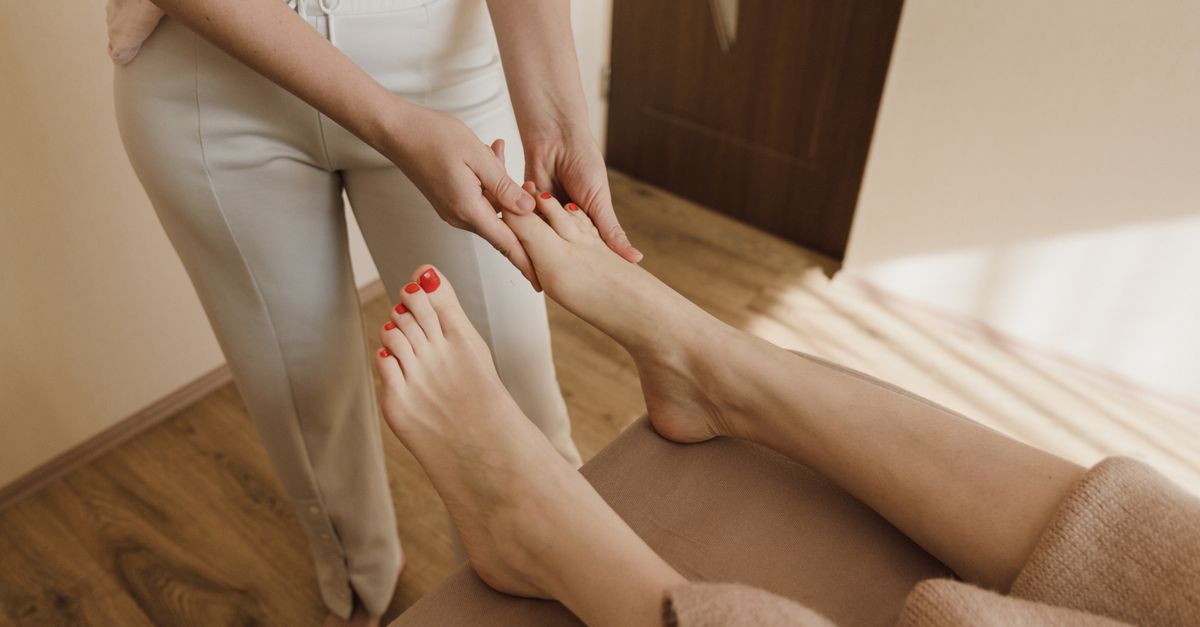
Un masseur pour une personne qui ne peut pas atteindre ses pieds est un appareil sur plateforme posé au sol sur lequel l'utilisateur se tient debout ou pose simplement ses pieds, éliminant ainsi le besoin de se pencher, de se tordre ou de tenir quoi que ce soit à la main. Ces masseurs de pieds de type plateforme fonctionnent avec un mouvement oscillant contrôlé par une pédale ou un bouton à portée de main, de sorte qu'aucune flexion vers l'avant ou de préhension n'est requise à aucun moment du processus. Cette conception convient aux personnes souffrant de maux de dos, ayant eu des remplacements de hanche ou de genou, d'obésité, d'arthrite ou d'une flexibilité générale réduite qui rend les soins traditionnels des pieds ou les outils de massage portatifs peu pratiques.
Se pencher pour couper un ongle d'orteil, lacer une chaussure ou tenir un masseur portatif contre un talon douloureux semble simple jusqu'à ce qu'un dos raide ou une mauvaise hanche le rende impossible. C'est pourquoi tant de gens commencent à chercher un masseur pour une personne qui ne peut pas atteindre ses pieds, que ce soit pour eux-mêmes ou pour un parent, un conjoint ou un patient.
Ce guide est destiné aux soignants, aux personnes âgées et à toute personne dont le dos, les hanches, les genoux ou la taille rendent la flexion vers l'avant douloureuse ou dangereuse. Il explique pourquoi atteindre ses propres pieds devient plus difficile avec l'âge ou les blessures, comment une conception de plateforme au sol résout le problème de la portée, et quelles caractéristiques permettent d'utiliser le masseur en toute sécurité sans aide.
Pourquoi atteindre ses propres pieds devient difficile
Se pencher vers ses pieds nécessite une flexion de la colonne vertébrale, une flexion de la hanche et une flexion du genou travaillant ensemble harmonieusement. Lorsque l'une de ces articulations perd de son amplitude de mouvement, tout le mouvement devient plus difficile ou douloureux, et parfois impossible sans soutien. Les limitations les plus courantes comprennent :
- Sténose spinale lombaire ou discopathie dégénérative limitant la flexion vers l'avant
- Remplacement récent de la hanche ou du genou avec précautions de flexion
- Arthrose de la hanche, du genou ou du bas du dos
- Poids corporel plus élevé réduisant l'espace disponible entre le torse et les cuisses
- Instabilité de l'équilibre qui fait de la flexion vers l'avant un risque de chute
Limitations du dos et de la colonne vertébrale
Des affections telles que la sténose spinale lombaire, la discopathie dégénérative et la sciatique limitent la capacité de flexion vers l'avant de la colonne lombaire. La Mayo Clinic note que la sténose spinale rétrécit l'espace autour de la moelle épinière et des nerfs. Pour les personnes atteintes de ces affections, la flexion vers l'avant n'est pas seulement inconfortable. Elle peut déclencher une douleur aiguë le long de la jambe ou un engourdissement qui persiste pendant des heures.
Restrictions de la hanche et du genou
L'arthrose de la hanche, les prothèses de hanche et les prothèses de genou s'accompagnent toutes de précautions de mouvement qui limitent l'amplitude de flexion d'une articulation en toute sécurité. De nombreux patients ayant subi une prothèse de hanche sont invités à éviter de fléchir la hanche au-delà de 90 degrés pendant des semaines ou des mois après la chirurgie, ce qui rend l'atteinte des pieds directement interdite pendant la convalescence. Même sans chirurgie, les changements arthritiques de l'articulation de la hanche ou du genou réduisent le mouvement de glissement doux nécessaire pour plier le corps vers l'avant confortablement.
Facteurs liés au poids corporel et à l'équilibre
Un poids corporel plus élevé modifie la mécanique de la flexion vers l'avant, car il y a tout simplement moins de place pour que le torse se plie vers les jambes. L'équilibre devient également une préoccupation majeure pour toute personne qui se penche en avant depuis une position debout ou assise, en particulier pour les personnes âgées dont le risque de chute est déjà élevé. Des articulations restreintes, une masse corporelle supplémentaire et un équilibre instable sont les raisons pour lesquelles tant de personnes renoncent discrètement au massage des pieds, aux soins des ongles ou même à enfiler des chaussettes sans aide.
Comment les masseurs de pieds à plateforme résolvent le problème de la portée
La plupart des masseurs de pieds portatifs et vibrants exigent toujours que l'utilisateur se penche en avant, tienne l'appareil contre le pied et ajuste sa position à la main. Cela va à l'encontre du but pour quiconque ne peut pas atteindre confortablement ses pieds en premier lieu. MedMassager utilise une technologie oscillante pour délivrer une vibration plus profonde et plus contrôlée que les masseurs conventionnels, et cela se fait par le biais d'une plateforme plate sur laquelle les pieds reposent plutôt qu'un outil portatif qui doit être positionné manuellement.
Pas besoin de se pencher, par conception
Un masseur à plateforme au sol est posé sur le sol devant une chaise, un canapé ou un fauteuil roulant. L'utilisateur pose ses pieds à plat sur la surface et allume l'appareil à l'aide d'un bouton bas ou d'une télécommande sans fil. Ce choix de conception unique élimine trois obstacles distincts :
- Pas de flexion vers l'avant pour atteindre les pieds
- Pas de préhension ou de maintien d'un appareil contre un point douloureux
- Pas besoin de se pencher pour changer les réglages en cours de session
Oscillation versus simple vibration
La simple vibration a tendance à rester à la surface de la peau et perd rapidement de son intensité. Le mouvement oscillant déplace toute la plateforme selon un arc circulaire contrôlé, ce qui fait pénétrer le massage plus profondément dans les muscles et les tissus mous du pied sans que l'utilisateur ait besoin d'appuyer ou de repositionner quoi que ce soit. Pour une personne souffrant de fasciite plantaire, ce mouvement maintient le sang en circulation dans le pied au lieu de le laisser stagner au repos, tout en restant assis les deux pieds à plat et immobiles. Vous pouvez parcourir la gamme complète de masseurs de pieds thérapeutiques à plateformes oscillantes pour comparer les niveaux d'intensité et les tailles.
Fonctionnalités des masseurs de pieds sans flexion à rechercher
Tous les masseurs de pieds commercialisés comme "mains libres" n'éliminent pas réellement la flexion. Certains exigent toujours que l'utilisateur se penche en avant pour régler les molettes d'intensité montées sur l'appareil lui-même, ce qui ramène le problème exact que vous essayez de résoudre.
Fonctionnalités qui éliminent réellement la portée
- Pédale ou télécommande : La puissance et l'intensité doivent être réglables sans se pencher en avant ou s'accroupir.
- Plateforme plate et ouverte : Les pieds doivent reposer sur la surface plutôt que d'être insérés dans une botte, une manchon ou une ouverture étroite qui nécessite de se pencher pour un positionnement correct.
- Base stable et antidérapante : L'appareil doit rester fermement en place sur un sol dur ou un tapis sans glisser lorsque les pieds sont posés.
- Plage d'intensité réglable : Les besoins varient entre une personne qui se remet d'une chirurgie et une personne qui gère une raideur chronique, donc une large plage de douceur à fermeté est importante.
- Taille de plateforme adéquate : Les pieds plus grands ou l'enflure due à des affections comme le lymphœdème nécessitent une surface suffisante pour s'asseoir confortablement sans dépasser du bord.
Ce qu'il faut éviter
Évitez tout appareil qui exige de le tenir contre le pied, d'insérer le pied dans une manchon de compression serré, ou de se pencher en avant pour atteindre les boutons montés bas sur l'appareil. Les masseurs de pieds à rouleaux qui doivent être roulés manuellement sous le pied exigent également une posture penchée en avant prolongée, ce qui est exactement le mouvement que ce guide d'achat est censé vous aider à éviter.
Si une photo de produit montre quelqu'un se penchant en avant pour faire fonctionner l'appareil, c'est le signe qu'il n'a pas été conçu en tenant compte de la mobilité réduite. La gamme de masseurs de pieds MedMassager est conçue pour une utilisation assise et sans flexion, avec des commandes positionnées pour une portée facile depuis une posture assise normale.
Installer un masseur de pieds sans se pencher
Une installation correcte est tout aussi importante que l'appareil lui-même. Même le meilleur masseur à plateforme peut finir par nécessiter une flexion inconfortable s'il est placé à la mauvaise hauteur ou distance de la chaise.
Choisir la bonne chaise et la bonne hauteur d'assise
Une chaise de salle à manger ou un fauteuil standard, d'environ 43 à 48 centimètres du sol au siège, positionne généralement les genoux à un angle confortable lorsque les pieds reposent sur un masseur à plateforme. Les chaises trop basses forcent les genoux à se lever plus haut que les hanches, ce qui peut fatiguer le bas du dos pendant une longue séance. Les fauteuils inclinables fonctionnent également bien, tant que le repose-pieds est rétracté afin que les pieds atterrissent à plat sur la plateforme plutôt qu'en biais.
Installation étape par étape sans assistance
- Placez le masseur sur une surface plane et dure ou sur une moquette à poils ras directement devant votre chaise, suffisamment près pour que vos genoux se plient confortablement lorsque vos pieds reposent sur la plateforme.
- Asseyez-vous d'abord, puis faites glisser vos pieds sur la plateforme sans vous pencher en avant.
- Allumez l'appareil à l'aide de la pédale ou de la télécommande sans fil, en gardant les mains et le dos dans une position détendue et droite.
- Commencez par le réglage d'intensité le plus bas pour les premières sessions, puis augmentez progressivement à mesure que vos pieds s'adaptent.
- Utilisez l'appareil pendant 10 à 20 minutes par session, et éteignez-le de la même manière, sans vous pencher pour atteindre un interrupteur monté au sol.
Une fois le masseur positionné près de votre chaise habituelle, il n'y a pas d'installation quotidienne au-delà de s'asseoir et de faire glisser vos pieds vers l'avant. C'est l'une des raisons pour lesquelles les unités de type plateforme de la collection complète de masseurs thérapeutiques MedMassager sont populaires auprès des personnes qui vivent seules ou qui n'ont personne pour les aider avec un appareil portatif.
Considérations spéciales pour les seniors et les personnes à mobilité réduite
Les limitations de portée apparaissent rarement seules. Elles sont généralement associées à d'autres facteurs de santé qui affectent la façon dont un masseur de pieds doit être choisi et utilisé.
Diabète et neuropathie
Les personnes atteintes de diabète ou de neuropathie périphérique sont souvent confrontées à une réduction de la sensibilité des pieds en plus d'une flexibilité limitée. L'utilisation d'une plateforme mains libres est encore plus importante dans cette situation, car elle élimine le besoin de juger la pression ou le positionnement au toucher en se penchant. Le mouvement répété du pied sur une plateforme oscillante active les muscles du mollet, ce qui favorise la circulation sanguine hors des pieds, et ce, sans que l'utilisateur ait besoin de saisir ou d'ajuster quoi que ce soit à la main. Toute personne atteinte de diabète ou d'une sensibilité réduite des pieds doit consulter un médecin avant de commencer une nouvelle routine de massage des pieds, car les contrôles cutanés et la tolérance à la pression varient d'une personne à l'autre.
Utilisateurs bariatriques et de grande taille
La taille du corps affecte à la fois la capacité à se pencher en avant et l'espace de plateforme nécessaire pour une utilisation confortable. Recherchez une plateforme plus large et une base stable conçue pour des capacités de poids plus élevées, car une unité instable ou sous-dimensionnée compromet l'intérêt même d'une conception sans flexion. Les masseurs conçus pour un plus large éventail de types de corps indiquent généralement une capacité de poids dans les spécifications du produit, ce qu'il est utile de vérifier avant d'acheter.
Aidants installant l'appareil pour quelqu'un d'autre
Si vous installez l'appareil pour un parent ou un patient plutôt que pour vous-même, positionnez l'unité près de leur chaise la plus utilisée et testez la télécommande ou la pédale avec eux avant de la laisser en utilisation quotidienne. L'objectif est de restaurer l'autonomie, pas de créer une nouvelle tâche qui nécessite toujours de l'aide. Avant de partir, assurez-vous que :
- La hauteur de la chaise permet à leurs pieds de reposer à plat sur la plateforme
- La pédale ou la télécommande est accessible depuis une position assise normale
- Ils peuvent démarrer et arrêter l'appareil seuls
- Le masseur est posé sur une surface où il ne glissera pas pendant l'utilisation
Questions Fréquemment Posées
Quel est le meilleur masseur de pieds pour une personne qui ne peut pas se pencher ?
Un masseur de pieds de type plateforme au sol est généralement la meilleure option, car les pieds reposent sur l'appareil plutôt que d'être insérés dans un appareil qui nécessite un positionnement manuel. Recherchez-en un avec une pédale ou une télécommande sans fil afin que l'intensité puisse être ajustée sans se pencher en avant. Cela élimine la flexion à chaque étape du processus, de l'installation à l'utilisation quotidienne.
Peut-on utiliser un masseur de pieds sans se pencher ?
Oui, les masseurs de pieds à plateforme sont spécifiquement conçus à cet effet. L'utilisateur s'assoit sur une chaise, glisse ses pieds sur la surface plane et contrôle la puissance et l'intensité à l'aide d'une pédale ou d'une télécommande positionnée à portée de main. Aucune flexion vers l'avant, de préhension ou de repositionnement manuel n'est nécessaire à aucun moment.
Comment fonctionnent les masseurs de pieds à plateforme ?
Les masseurs de pieds à plateforme utilisent un mouvement oscillant qui déplace toute la surface selon un arc circulaire contrôlé plutôt que de simplement vibrer contre la peau. Ce mouvement travaille les muscles et les tissus mous du pied pendant que les pieds de l'utilisateur restent à plat et immobiles sur l'appareil. L'oscillation est généralement réglable sur plusieurs niveaux d'intensité pour s'adapter au confort et à la tolérance.
Les masseurs de pieds sont-ils sans danger pour les personnes atteintes de diabète ou de neuropathie ?
Les masseurs de pieds à plateforme peuvent être utilisés par de nombreuses personnes atteintes de diabète ou de neuropathie, mais toute personne ayant une sensibilité réduite des pieds doit consulter un médecin avant de commencer une utilisation régulière. Une sensibilité réduite peut rendre plus difficile la détection d'une pression excessive ou d'une irritation cutanée, il est donc important d'obtenir des conseils professionnels sur les réglages appropriés. Des contrôles cutanés réguliers sont également recommandés pour toute personne diabétique utilisant un appareil de massage sur les pieds.
Quelle hauteur d'assise convient le mieux à un masseur de pieds au sol ?
Une hauteur de chaise standard d'environ 43 à 48 centimètres du sol positionne généralement les genoux à un angle confortable pour l'utilisation du masseur de pieds. Les chaises trop basses peuvent pousser les genoux plus haut que les hanches et exercer une tension sur le bas du dos pendant des sessions plus longues. Un fauteuil inclinable fonctionne également, à condition que le repose-pieds soit rétracté afin que les pieds reposent à plat sur la plateforme.
Les seniors à mobilité réduite peuvent-ils installer un masseur de pieds sans aide ?
Oui. Une fois l'appareil placé près d'une chaise habituelle, l'utilisation quotidienne ne nécessite que de s'asseoir et de faire glisser les pieds sur la plateforme. Les unités avec une pédale ou une télécommande sans fil permettent une utilisation entièrement indépendante sans que personne d'autre ne soit présent. Le travail ponctuel de positionnement de l'unité près d'une chaise peut être plus facile avec une deuxième personne, mais l'utilisation quotidienne n'en nécessite pas.
En bref
Choisir un masseur pour une personne qui ne peut pas atteindre ses pieds se résume à une caractéristique essentielle : une conception à plateforme plate qui élimine la flexion. Les masseurs portatifs et à rouleaux peuvent sembler similaires sur les photos de produits, mais s'ils nécessitent de se pencher en avant pour les tenir, les positionner ou les ajuster, ils ne résolvent pas réellement le problème de la portée. Une plateforme oscillante stable avec une pédale ou une télécommande permet à une personne de s'asseoir, de glisser ses pieds vers l'avant et de profiter d'un massage complet des pieds sans jamais se pencher.
Que vous achetiez pour vous-même après une prothèse de hanche ou que vous l'installiez pour un parent souffrant de douleurs dorsales chroniques, les exigences sont les mêmes : la bonne hauteur de chaise, un placement stable et des commandes à portée de main. Explorez la collection de masseurs de pieds MedMassager pour trouver une taille de plateforme et une plage d'intensité adaptées, et retrouvez un peu de l'autonomie que les limitations de flexion ont érodée.
Ce contenu est fourni à titre informatif uniquement et n'est pas destiné à être un avis médical, un diagnostic ou un traitement. Consultez toujours un professionnel de la santé qualifié avant de commencer tout nouveau traitement ou thérapie. Les produits MedMassager sont des dispositifs médicaux de classe I enregistrés auprès de la FDA.


