
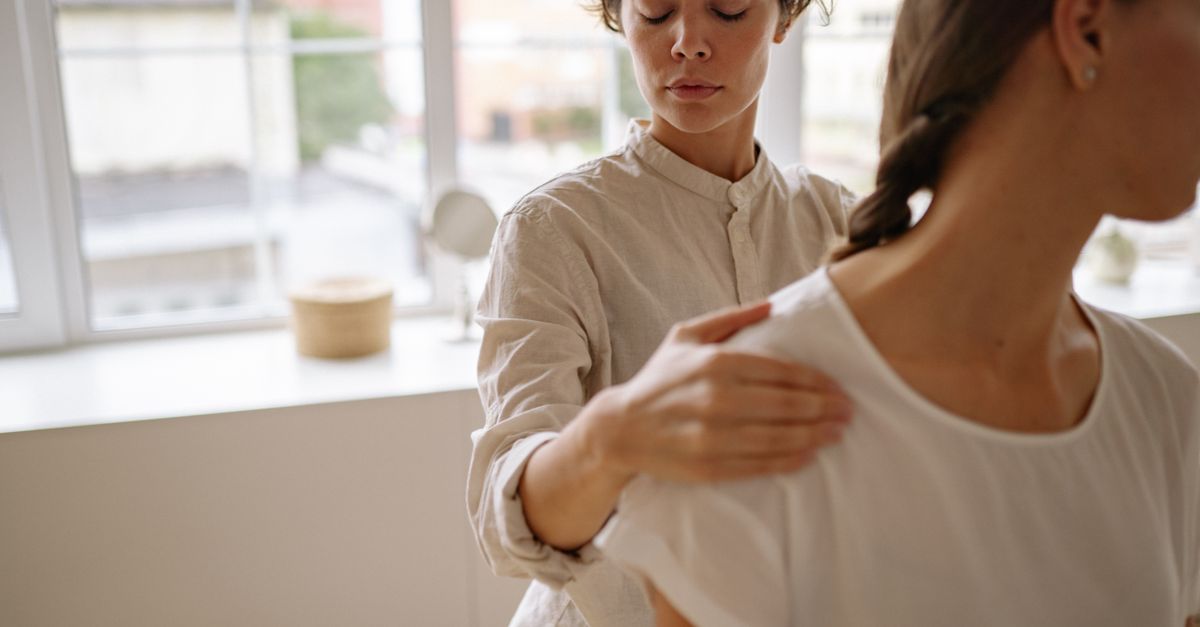
Los cuidadores pueden masajear de forma segura a personas con movilidad limitada trabajando alrededor de la posición actual de la persona en lugar de exigirle que se mueva, centrándose en áreas accesibles como la parte inferior de las piernas, los pies, las manos, los antebrazos y la parte superior de la espalda. La presión debe ser de ligera a moderada, especialmente para los adultos mayores o cualquier persona con piel frágil, tejido adelgazado o afecciones circulatorias. Las sesiones de 10 a 20 minutos por área suelen ser apropiadas, prestando atención al color de la piel y a las respuestas verbales y no verbales de la persona en todo momento. Ciertas situaciones, que incluyen cirugía reciente, hinchazón inexplicable en una extremidad, daño cutáneo activo o antecedentes de coágulos sanguíneos, requieren la autorización del equipo de atención antes de comenzar el masaje.
Si está cuidando a alguien que pasa la mayor parte de su tiempo en la cama o en una silla, ya sabe cuánto su cuerpo paga el precio de permanecer inmóvil. Los músculos se endurecen. La circulación se ralentiza. La incomodidad se asienta en lugares difíciles de alcanzar y más difíciles de explicar. El masaje del cuidador para la movilidad limitada no se trata de técnicas de spa, se trata de proporcionar un alivio físico real a alguien que no puede buscarlo fácilmente por sí mismo, utilizando cualquier posición en la que ya se encuentre.
Esta guía cubre lo que los cuidadores necesitan saber para proporcionar un masaje seguro y eficaz sin pedirle a la persona que se reposicione innecesariamente. Encontrará orientación sobre qué áreas son accesibles y apropiadas, cómo ajustar la presión para la piel frágil o envejecida, cuánto deben durar las sesiones, qué situaciones requieren la aprobación de un médico antes de comenzar y cómo un masajeador terapéutico puede reducir el esfuerzo físico que el cuidado práctico le exige a usted como cuidador.
Qué ocurre cuando la movilidad es gravemente limitada
Comprender la realidad física de la movilidad limitada ayuda a los cuidadores a tomar mejores decisiones sobre dónde concentrarse y cuánta presión usar. Los cambios que ocurren no se refieren solo a la comodidad, sino que afectan la integridad de la piel, la circulación y la salud de los tejidos de maneras que importan para la seguridad del masaje.
Circulación y acumulación de líquidos
El movimiento normal, incluso solo caminar por una habitación, activa los músculos de la pantorrilla, que actúan como una bomba secundaria que impulsa la sangre venosa de regreso al corazón. Cuando alguien está postrado en cama o en silla de ruedas durante períodos prolongados, esa acción de bombeo desaparece en gran medida. La sangre y el líquido linfático pueden acumularse en la parte inferior de las piernas y los pies, lo que contribuye a la hinchazón, la pesadez y la incomodidad.
Las investigaciones de la medicina de rehabilitación muestran consistentemente que la inmovilidad acelera la insuficiencia venosa y aumenta el riesgo de trombosis venosa profunda (TVP), particularmente en las extremidades inferiores. Esta es una de las razones por las que los pies y la parte inferior de las piernas son una prioridad para el masaje y un sitio que requiere una revisión cuidadosa antes de comenzar.
Cambios musculares y tisulares
Los músculos que no se usan regularmente pierden tono y elasticidad. El tejido conectivo se tensa. En los adultos mayores o en cualquier persona con una enfermedad crónica, la piel puede volverse más delgada y frágil —a veces llamada fragilidad de la piel o piel de papel de seda— porque la dermis pierde colágeno y grasa subcutánea con el tiempo.
Esto no es solo un cambio estético. Significa que la presión perfectamente cómoda en un adulto sano puede causar hematomas, desgarros de la piel o molestias en alguien con integridad tisular reducida.
Patrones de dolor e incomodidad en la inmovilidad
Las personas con movilidad gravemente limitada a menudo desarrollan patrones de dolor predecibles. Los puntos de presión alrededor del sacro, los talones, los omóplatos y las caderas son propensos a la incomodidad y el daño por el contacto sostenido con colchones y cojines de sillas. Los músculos alrededor del cuello, la parte superior de la espalda y los hombros se tensan por las posiciones sostenidas. Las manos y los antebrazos se endurecen, especialmente en personas que han sufrido accidentes cerebrovasculares o tienen afecciones neuromusculares. Reconocer estos patrones ayuda a los cuidadores a priorizar las áreas correctas.
Cuándo obtener primero la autorización del equipo de atención
El masaje es generalmente seguro para personas con movilidad limitada, pero varias situaciones específicas requieren que un médico, fisioterapeuta o enfermero practicante lo autorice antes de comenzar. Proceder sin autorización en estos casos conlleva un riesgo real.
- Cirugía reciente: Los sitios quirúrgicos, el tejido circundante y las estructuras más profundas necesitan tiempo para sanar. El masaje cerca de una incisión o área operativa antes de una curación adecuada puede interrumpir la reparación de los tejidos o introducir complicaciones.
- Hinchazón inexplicable en una extremidad: La hinchazón asimétrica —una pierna significativamente más hinchada que la otra— es un posible signo de advertencia de TVP. Masajear una extremidad con un coágulo no diagnosticado puede desalojarlo. Si nota esto, deténgase y comuníquese con el equipo de atención antes de cualquier masaje de esa extremidad.
- Daño cutáneo activo o heridas abiertas: Cualquier área con piel rota, úlceras por presión o heridas activas está prohibida para el masaje directo. Puede trabajar alrededor de estas áreas, pero nunca directamente sobre la piel comprometida.
- Antecedentes de coágulos sanguíneos o trastornos de la coagulación: Obtenga una guía explícita del médico sobre qué áreas y niveles de presión son apropiados.
- Dolor o hematomas inexplicables: Si la persona informa un dolor agudo o inusual en un área, o si nota hematomas inexplicables, evite esa área e infórmelo al equipo de atención.
- Infección activa o fiebre: La enfermedad sistémica es una contraindicación para el masaje hasta que la persona se haya recuperado.
- Afecciones óseas frágiles: La osteoporosis o la enfermedad ósea metastásica requieren una técnica modificada y muy suave; confirme los niveles de presión seguros con el fisioterapeuta.
En caso de duda, una breve llamada o mensaje al equipo de atención lleva minutos y protege tanto a la persona que recibe atención como a usted como cuidador.
Cómo el masaje ayuda a las personas con movilidad limitada
Para alguien con movilidad limitada, el masaje hace más que sentirse bien en el momento. Los mecanismos físicos se traducen directamente en mejoras medibles en la comodidad que importan en el cuidado diario.
Soporte circulatorio sin movimiento activo
El masaje manual y los masajeadores terapéuticos oscilantes introducen movimiento externo en el tejido muscular, activando el mismo mecanismo de bombeo básico que proporcionaría la caminata. La estimulación muscular repetida empuja la sangre hacia arriba a través de las venas, reduciendo la acumulación en la parte inferior de las piernas y los pies. Para las personas que manejan afecciones como la neuropatía o el edema asociado con la movilidad reducida, este tipo de soporte circulatorio pasivo es significativo.
Un masajeador terapéutico de pies puede proporcionar este movimiento circulatorio continuamente —a menudo de manera más consistente de lo que el masaje manual puede mantener— sin requerir que el cuidador aplique presión manual durante períodos prolongados. El masajeador de pies de MedMassager utiliza tecnología oscilante para proporcionar una vibración profunda y controlada a través del pie y la parte inferior de la pierna, activando la bomba muscular de la pantorrilla y manteniendo la sangre en movimiento cuando el movimiento natural es limitado.
Tensión muscular y comodidad
La posición estática prolongada provoca tensión muscular, incluso cuando la persona no se está esforzando activamente. El masaje ligero a moderado de la parte superior de la espalda, los hombros, las manos y el cuello aborda esta tensión acumulada. También estimula el sistema nervioso de una manera que muchas personas encuentran genuinamente relajante, lo que reduce la ansiedad y mejora la calidad del sueño, que son factores significativos de calidad de vida para las personas que reciben atención a largo plazo.
Estimulación de la piel y alivio de la presión
El masaje suave aumenta el flujo sanguíneo local a la superficie de la piel, lo que favorece la nutrición de los tejidos y puede complementar las estrategias de prevención de lesiones por presión. Esto no sustituye los protocolos de reposicionamiento —que siguen siendo esenciales— pero es una adición significativa a un enfoque integral del cuidado de la piel para alguien que está postrado en cama o en silla de ruedas durante períodos prolongados.
Posicionamiento seguro: trabaje alrededor de la persona
Una de las habilidades más prácticas para el masaje del cuidador es aprender a trabajar con la posición en la que ya se encuentra la persona. Pedirle a alguien con movilidad limitada que se reposicione repetidamente para acomodar un masaje crea una tensión y un riesgo innecesarios para ambos.
Para alguien acostado boca arriba (supino)
Supino es la posición más común para personas postradas en cama y ofrece un buen acceso a varias áreas prioritarias:
- Pies y parte inferior de las piernas: Párese o siéntese a los pies de la cama. Sostenga el talón con una mano mientras trabaja la planta del pie y la parte inferior de la pantorrilla con la otra. Un masajeador de pies colocado a los pies de la cama permite trabajar sin manos en esta área.
- Manos y antebrazos: Fácilmente accesibles desde cualquier lado. El brazo de la persona puede descansar plano, no se requiere reposicionamiento.
- Parte superior del pecho y hombros (anterior): Accesible desde el lado de la cama con la persona acostada o con la cabecera de la cama ligeramente elevada.
- Cuero cabelludo y cuello: Trabaje desde detrás de la cabeza o desde un lado; use solo la presión de la yema del dedo en el cuero cabelludo y una presión muy ligera a lo largo del cuello.
Para alguien en una silla o silla de ruedas
El posicionamiento sentado abre la parte superior de la espalda y los hombros mientras mantiene accesibles las extremidades inferiores:
- Parte superior de la espalda y hombros: De pie o sentado detrás de la persona proporciona un buen acceso al trapecio, la parte superior de la zona torácica y los músculos de los hombros, áreas que suelen soportar una tensión significativa por estar sentado de forma prolongada.
- Manos y antebrazos: Apoye el brazo de la persona en el reposabrazos o en una almohada sobre su regazo y trabaje desde allí.
- Parte inferior de las piernas y los pies: Siéntese delante o al lado de la persona. Elevar ligeramente el pie sobre un pequeño reposapiés o una toalla doblada facilita el acceso sin necesidad de que la persona se mueva.
Para alguien acostado de lado
La posición lateral es común durante los horarios de reposicionamiento y permite acceder a la espalda y las caderas, algo que la posición supina no permite:
- Parte inferior de la espalda y zona sacra: Use movimientos ligeros y amplios con las manos. Evite la presión directa sobre las prominencias óseas.
- Parte superior de la espalda y hombros: Accesible a lo largo de toda la columna vertebral y la zona de los omóplatos.
- Cadera y parte externa del muslo: Use movimientos suaves y de barrido; evite la presión profunda sobre el trocánter mayor (la prominencia ósea en la parte externa de la cadera).
Presión, duración y técnica para piel frágil
Las recomendaciones de presión de masaje estándar están escritas para adultos sanos con integridad tisular normal. Para personas con movilidad limitada, especialmente adultos mayores, aquellos con enfermedades crónicas o individuos que toman corticosteroides, son necesarios ajustes significativos.
Pautas de presión
Comience cada sesión con menos presión de la que cree que necesita. Una presión de 1 a 3 sobre 10 es apropiada para áreas con piel frágil o cerca de prominencias óseas. Puede aumentar ligeramente en áreas musculares como las pantorrillas, la parte superior de la espalda o los hombros si la persona indica que se siente cómoda, pero siempre deje que sus comentarios lo guíen.
Observe los cambios de color de la piel durante el masaje. El enrojecimiento persistente que no desaparece en unos minutos después de detenerse es una señal de que la presión fue excesiva. Los hematomas que aparecen en las horas o días posteriores a una sesión significan que debe reducir la presión en futuras sesiones y consultar con el equipo de atención si los hematomas son inesperados o extensos.
Tipos de trazos que funcionan bien
El effleurage (trazos largos y deslizantes que siguen la dirección del retorno venoso hacia el corazón) es la técnica más segura y apropiada para el cuidado de la movilidad limitada. Calienta el tejido, estimula la circulación y es poco probable que cause daño cuando la presión es adecuada. Evite la fricción profunda, el trabajo de fibra cruzada o las técnicas que requieran que la persona se resista o se estabilice.
Duración de la sesión
De diez a veinte minutos por área es un objetivo razonable para la mayoría de las sesiones. Una sesión completa que cubra los pies y la parte inferior de las piernas, más las manos y la parte superior de la espalda, podría durar de 30 a 45 minutos en total. Preste atención a las señales de fatiga: si la persona se inquieta, se comunica menos o pide que se detenga, finalice la sesión. Las sesiones más cortas realizadas de forma constante son más valiosas que las sesiones largas poco frecuentes.
Cómo un masajeador terapéutico reduce la tensión del cuidador
El masaje manual es físicamente exigente. Los cuidadores que realizan masajes manuales regulares a alguien con movilidad limitada corren un riesgo real de sufrir lesiones por esfuerzos repetitivos en las manos, las muñecas y los antebrazos, las mismas estructuras de las que dependen para los traslados, el posicionamiento y las tareas de cuidado diario.
Descargando el trabajo
Un masajeador terapéutico de pies colocado a los pies de la cama o a los pies de una persona mientras está sentada se encarga del masaje de la parte inferior de las piernas y los pies de forma autónoma. El cuidador coloca los pies, enciende el dispositivo y puede realizar otras tareas de cuidado o simplemente descansar mientras el masajeador trabaja. Para un área del cuerpo que realmente se beneficia de una atención constante y sostenida, esto es importante.
Para el trabajo en la parte superior de la espalda y los hombros, un masajeador corporal de grado profesional le brinda al cuidador una herramienta que aplica una presión oscilante consistente y profunda sin requerir el compromiso sostenido de la mano y la muñeca que exige el masaje manual. El masajeador corporal de MedMassager penetra las capas musculares profundas, brindando el tipo de presión constante que es difícil de mantener a mano durante una sesión completa. El cuidador guía el dispositivo, el dispositivo hace el trabajo.
Haciendo el cuidado sostenible
El agotamiento del cuidador es una realidad bien documentada. El esfuerzo físico del cuidado manual se acumula durante meses y años. La incorporación de herramientas asistidas por dispositivos en una rutina de cuidado no se trata solo de la comodidad de la persona que recibe el cuidado, es una inversión práctica en la capacidad del cuidador para seguir brindando ese cuidado.
Explore la gama completa de masajeadores terapéuticos MedMassager diseñados para un uso terapéutico constante y continuo.
Creación de una rutina sencilla para condiciones de cuidado reales
La constancia importa más que cualquier técnica individual. Una rutina sencilla realizada varias veces a la semana ofrece un beneficio acumulativo mayor que una sesión completa ocasional.
Un marco básico inicial
- Revise la piel antes de comenzar: Examine las áreas en las que planea trabajar en busca de enrojecimiento, hinchazón, hematomas o lesiones en la piel. Si algo le preocupa, omita esa área o consulte al equipo de atención.
- Colóquese para proteger su propio cuerpo: Siéntese cuando pueda, mantenga la superficie de trabajo a una altura cómoda y evite torcerse o agacharse durante períodos prolongados.
- Aplique una loción ligera o crema de masaje: Esto reduce la fricción en la piel frágil y suaviza los movimientos. Las fórmulas sin perfume suelen ser mejor toleradas.
- Comience con los pies y la parte inferior de las piernas: De 10 a 15 minutos utilizando movimientos ligeros de effleurage hacia la rodilla. Complemente o reemplace con un masajeador de pies cuando esté disponible.
- Pase a las manos y los antebrazos: De 5 a 10 minutos por lado. Presión ligera a moderada siguiendo la dirección del retorno venoso hacia el codo.
- Termine con la parte superior de la espalda y los hombros si son accesibles: De 10 a 15 minutos usando el masajeador corporal o movimientos largos y deslizantes a través del trapecio y la zona torácica superior.
- Verifique constantemente: Pregunte regularmente cómo se siente la presión. Observe las expresiones faciales, el lenguaje corporal o las señales verbales que indiquen incomodidad.
Frecuencia
De tres a cinco sesiones por semana es una frecuencia realista y beneficiosa para la mayoría de las situaciones de cuidado. Las sesiones diarias breves de 10 a 15 minutos en los pies y la parte inferior de las piernas son apropiadas para personas que manejan problemas circulatorios importantes, con la orientación del equipo de atención. Deje que la respuesta de la persona y su propia capacidad física guíen el horario; no tiene valor una rutina que agote al cuidador.
Preguntas frecuentes
¿Es seguro masajear a una persona postrada en cama?
El masaje es generalmente seguro para las personas postradas en cama cuando se realiza con la presión y la técnica adecuadas, y cuando se han descartado las contraindicaciones. Los cuidadores deben evitar las áreas con lesiones cutáneas activas, hinchazón inexplicable, heridas abiertas o sitios quirúrgicos recientes. En caso de duda sobre una situación o condición específica, consultar al médico o fisioterapeuta de la persona antes de comenzar es el enfoque correcto.
¿Qué zonas se deben evitar masajear en una persona con movilidad reducida?
Evite masajear directamente sobre heridas abiertas, úlceras por presión o áreas con lesiones cutáneas activas. No aplique presión sobre prominencias óseas como la columna vertebral, el sacro, los talones o los huesos de la cadera. Cualquier extremidad con hinchazón asimétrica inexplicable debe evitarse hasta que un profesional médico haya descartado un coágulo sanguíneo, y las áreas cercanas a una cirugía reciente requieren autorización antes del masaje.
¿Cuánta presión debe usar un cuidador al masajear a alguien con piel frágil?
Comience con una presión muy ligera, aproximadamente de 1 a 3 en una escala de 10, particularmente sobre las áreas donde la piel parece delgada, magullada o descolorida. Aumente la presión gradualmente solo en áreas bien musculadas como las pantorrillas o la parte superior de la espalda, y solo si la persona confirma que se siente cómoda. El enrojecimiento persistente que dura más de unos pocos minutos después de una sesión es una señal para reducir la presión en el futuro.
¿Cuánto tiempo debe durar una sesión de masaje para una persona que está en silla de ruedas o postrada en cama?
Las sesiones de 10 a 20 minutos por área corporal son apropiadas para la mayoría de las personas con movilidad limitada. Una sesión completa que cubre pies, manos y parte superior de la espalda suele durar entre 30 y 45 minutos en total. Las sesiones más cortas y frecuentes son generalmente preferibles a las sesiones largas e infrecuentes, y la sesión debe terminar siempre que la persona muestre signos de fatiga o incomodidad, independientemente del tiempo transcurrido.
¿Se puede utilizar un masajeador de pies en alguien que no puede mover las piernas?
Sí, se puede utilizar un masajeador de pies en una persona con movimiento limitado o nulo de las piernas, siempre que el equipo de atención haya autorizado las contraindicaciones. El cuidador coloca los pies de la persona en el dispositivo, que luego proporciona un movimiento oscilante de forma pasiva, lo que es particularmente útil para mantener la circulación en la parte inferior de las piernas cuando el movimiento activo no es posible. Siempre consulte con el equipo de atención antes de usarlo si la persona tiene antecedentes de coágulos sanguíneos, neuropatía sensorial grave o heridas abiertas en los pies.
¿Cómo ayuda el masaje a prevenir las úlceras por presión en pacientes encamados?
Un masaje suave alrededor, no directamente sobre, las áreas de presión de alto riesgo estimula el flujo sanguíneo local y apoya la nutrición del tejido cutáneo, lo que puede complementar un protocolo integral de prevención de lesiones por presión. El masaje nunca debe reemplazar el reposicionamiento regular, que sigue siendo la intervención principal para la prevención de las úlceras por presión. Cualquier enrojecimiento o rotura de la piel existente debe informarse al equipo de atención y evitarse durante el masaje.
¿La aplicación de masajes regulares daña las manos y muñecas del cuidador?
El masaje manual repetitivo puede contribuir a la tensión en las manos, muñecas y antebrazos con el tiempo, particularmente para los cuidadores que ya realizan tareas físicamente exigentes como traslados y reposicionamiento. Usar un masajeador terapéutico para los pies, la parte inferior de las piernas y la espalda reduce significativamente la carga manual en las manos del cuidador. Incorporar herramientas asistidas por dispositivos en la rutina es una forma práctica de mantener la consistencia sin acumular lesiones por esfuerzo repetitivo.
Lo esencial para los cuidadores
El masaje del cuidador para la movilidad limitada no requiere capacitación especializada ni técnicas complicadas. Requiere comprender qué áreas son seguras para trabajar, cómo ajustar la presión para la persona que tiene delante y cuándo hacer una pausa y consultar al equipo de atención. Realizado de manera consistente y cuidadosa, proporciona un beneficio físico real —mejor circulación, reducción de la tensión muscular y un confort significativo— a alguien cuyas opciones para buscar alivio son limitadas.
Las herramientas asistidas por dispositivos hacen que este tipo de cuidado sea más sostenible. Un masajeador terapéutico de pies de calidad se encarga del trabajo de circulación de la parte inferior de la pierna sin forzar sus manos. Un masajeador corporal de grado profesional proporciona una presión profunda constante en la parte superior de la espalda y los hombros sin el agarre sostenido que exige el masaje manual. Ambas son inversiones en la calidad de la atención que también protegen al cuidador.
Los masajeadores terapéuticos de MedMassager son dispositivos médicos de Clase I registrados por la FDA, diseñados para un uso constante y continuo, exactamente el tipo de uso que requiere el cuidado a largo plazo. Explore la colección completa y encuentre el ajuste adecuado para su situación de cuidado.
Este contenido tiene fines informativos únicamente y no pretende ser un consejo médico, diagnóstico o tratamiento. Siempre consulte a un profesional de la salud calificado antes de comenzar cualquier nuevo tratamiento o terapia. Los productos MedMassager son dispositivos médicos de Clase I registrados por la FDA.


